A Love Story: Two Social Workers and A Plan
Regina Trailweaver | FEB 18, 2024
Based on many conversations with my mother in law, Johanna Robbins, she recounts the love story between two social workers but also the evolution of social work over the 20th century and her personal journey from social work to meditation teacher:
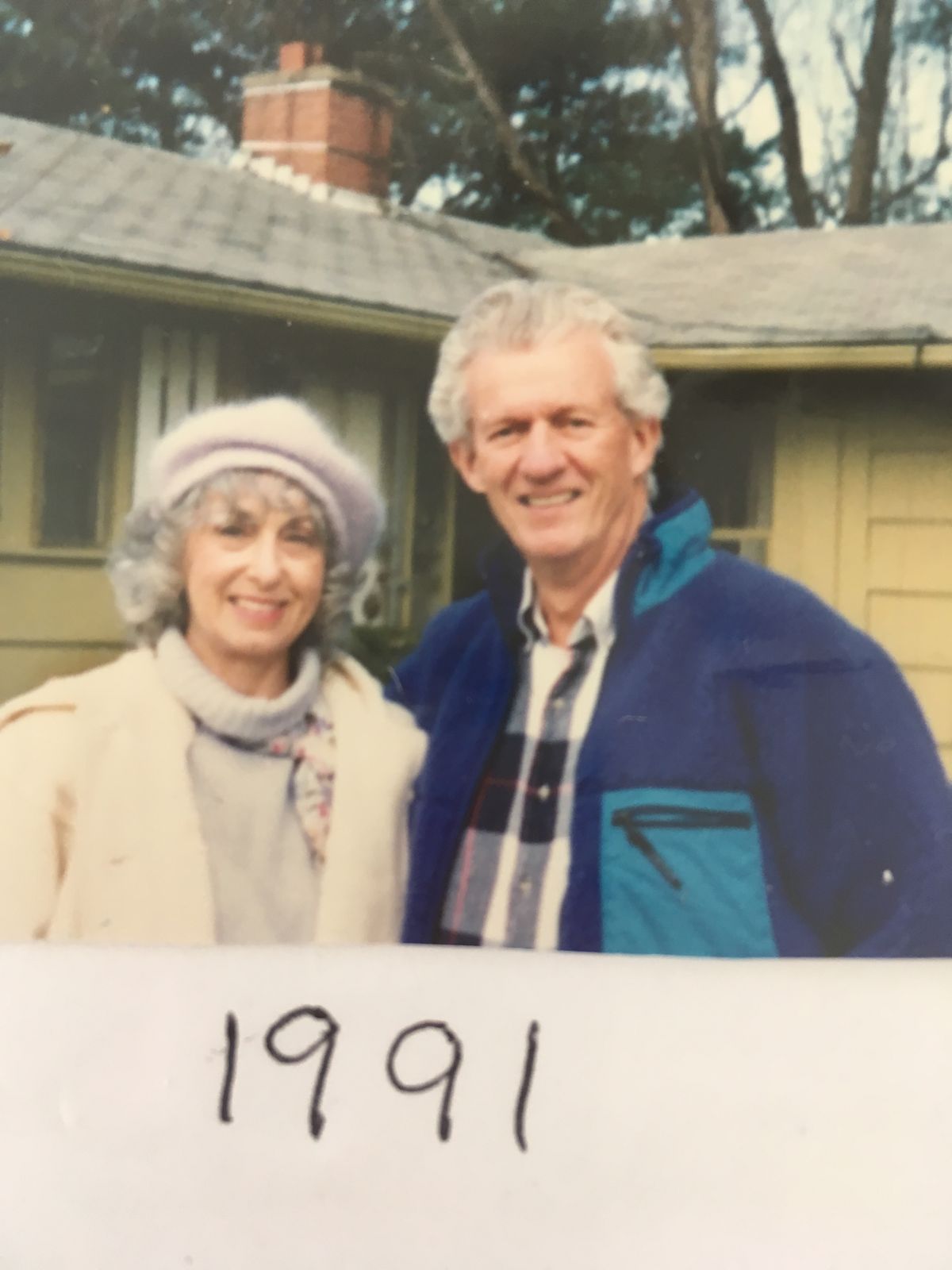
Johanna Weiss was majoring in psychology and English at UCLA in the late 1940s when she met Jerry Robbins who was studying business at USC. They fell in love, graduated, married and moved back to the Boston area where Jerry was originally from. They shared a deep sense of gratitude for their many blessings and gifts and also a vision of using their resources to make the world a better place. And so in 1950, the newlyweds started their master level studies at the Boston University School of Social Work. The first year, Jerry worked in a child guardianship program through a state government child welfare agency while Johanna studied full time. Then Jerry studied full time for two years while Jo studied and worked part time. At the time, there were three major areas of social work: case work, group work, and community work. Jerry was primarily a case worker while Johanna specialized in group work. They also started their family at this time; Johanna gave birth to Jeff, the oldest of their three sons. Andy was born a few years later and a few years after that Steve arrived to complete the picture. So there was never a dull moment as the young couple nimbly juggled the responsibilities of family and career.
One of Johanna’s favorite memories from the couples’ early years of social work practice in the 1950s is of a group that she and Jerry facilitated together on Saturday nights for young teens. Jerry would meet with the boys while Johanna met with the girls for 45 minutes and then they brought the two groups together. The girls brought a banquet of food and the boys provided the music but the boys and girls rarely danced or talked with each other. Yet Johanna (with her group work skills) noticed that they somehow managed to flirt quite a bit through body language and facial expressions and the boys were very eager to hold the door and other polite gestures for the girls.
Johanna’s internship led to full time employment directing several groups in a social work agency called the Hecht House which also reached out to the community through three after school programs. After obtaining his Master’s in Social Work, Jerry initially worked for a Big Brother program and other family services. He also worked for the Mass Correctional Institute in Framingham, a women’s prison. Jerry once took his oldest son, Jeff, to work with him as an educational experience. Jeff remembers that his father genuinely liked the inmates but also told his son that it was hard work “because some of them are so far down a difficult road.” Eventually, Jerry was hired as a school social worker and provided services in the Brookline school system. Jerry spent most of his career in this position where he was a dedicated advocate for students and their families. Working with middle school kids allowed for much more optimism as the chance of changing a trajectory for the better was much higher.
In the 1950s, Johanna also worked for Boston University’s School of Social Work, supervising social work students who were placed at Brookline Schools. Thus, she and Jerry interfaced frequently throughout their social work careers. Johanna especially enjoyed serving the growing minority and immigrant (mostly Japanese and Chinese) communities attending the Brookline schools. One of the biggest challenges was to address the isolation of Asian women in the home. Together, Johanna, her American Asian social work students, and Jerry developed programs to integrate the Chinese and Japanese women into the larger community. Johanna smiles and her eyes sparkle as she recounts the feasts of Chinese and Japanese cuisine that resulted from these programs. They also advocated for and provided services to the elusive Gypsy population. In the 1970’s, Johanna was the director of an alcohol and substance abuse program at St. Vincent’s Hospital in Worcester where she had to endure the attitudes of certain doctors who did not respect women in positions of responsibility. However, Johanna, a quiet but firm feminist, was not deterred, and she always received support and affirmation from Jerry.
One of the biggest changes that Johanna and Jerry lived through in the evolution of social work through the 20th century was a shift from the connection and relationship between the worker and the individual to working at community and organizational levels. For example, session notes went from describing the interaction between the worker and the client to checking off forms that codified the actions of the worker and the responses of the client. This was hard for Jerry as he enjoyed writing and loved talking to the folks he worked with on a more personal level. And folks loved him for his warm and heartfelt caring.
While Johanna agrees with Jerry, she sees the movement of social work towards addressing larger social issues as positive since it benefits more individuals and the whole of society. There had always been case work, group work, and community organization but it seemed that the field of social work began to focus more on community services rather than individual services. This tension continues to exist in the social work profession today as some social workers become licensed and essentially go into psychotherapy while others focus on community activism, policy development and legislation.
Jerry remained devoted to the profession of social work throughout his career, eventually moving towards geriatric social work while Johanna began practicing Transcendental Meditation (TM) in the 1960s and went on to teach the meditation technique and to direct centers for the movement of TM. She did continue to practice social work part time on and off throughout her career and was ahead of her time in understanding the healing power of meditation and its ability to reach every individual regardless of class, color, or creed.
Jerry died in 2005 and Johanna now lives in Vermont near the youngest of her three sons who is also my husband. Often when I visit with Johanna, we discuss social work challenges and issues and sometimes I consult with her on difficult cases. She always has words of wisdom and insight, a powerful blend of her Vedic and social work knowledge, that turn a difficult situation around. I did not get to meet Jerry but he too still provides guidance from and for the social work perspective. Over the past decade of my own life, listening to his wife and sons talk about Jerry’s life and work, I imagine Jerry’s advice in any circumstance: Identify the resources! Find the strengths already inherent in the individual and his/her circumstances and then identify and access the services and supports that will most enhance the person’s well being and development. This original precept of social work has stood the test of time and is as relevant in 2017 as it was when the fledgling social work profession began to establish the first settlement houses 130 years ago in 1887.
***I wrote this piece in 2017, just over six years before Johanna left us in early 2024.
Regina Trailweaver | FEB 18, 2024
Share this blog post